![]() |
![]() |
NEPAL
GEOGRAPHY
Nepal has some of the most dramatic mountain terrain in the world. The massive Himalayan mountain range was thrust up out of the ocean 50 million years ago when India collided with the rest of the Asian land mass. Today, Nepal is nearly 75% mountain, and it contains eight of the world's 10 highest peaks. And they just keep on getting bigger — tectonic plate movements means that the mountains continue to grow at the rate of several centimeters per year.
At the northernmost reach of the Indo-Gangetic Plain, the relatively flat Terai is fertile, low-lying (200m), hot, and humid. This whole area was once covered in dense stretches of malarial forest that supported only wild animals and hungry mosquitoes, but recent years have seen vast deforestation, and today it is the hub of Nepal's growing population. Jutting out from the Terai to altitudes of over 1500m, the forested Chure Hills run parallel to the 3000m Mahabharat Range farther north. Between the Chure and the Mahabarat Hills are the broad basins of the Inner
Terai, cut by the deep, north-south river gorges of Nepal's three biggest rivers — the Karnali, the Narayani, and the Kosi. At altitudes of 500 to 2000m, the Pahar region, north of the Mahabarat, is marked by flat, fertile valleys, including the Kathmandu, Banepa, and Pokhara Valleys. This region has been inhabited and cultivated longer than anywhere else in Nepal. Over 40% of the population lives in this region today.
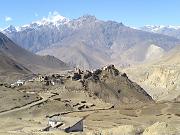
The mighty Himalayas are inhabited only in scattered pockets. Human settlements are sparse after about 4000m. Nepal's plant life thins out as altitudes increase, with the dense timber forests yielding to alpine pastures of spruce, birch, rhododendron, which stretch to the snowline. Beyond 4900m, nothing but mountains grow. Ten mountains in Nepal are higher than 8000m, including Mount Everest (8848m), the highest point on earth. North of the peaks is the high desert plateau of the Trans-Himalaya.
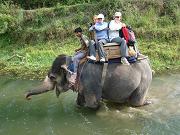
The Terai is inhabited by tigers, leopards, gaur (wild oxen), elephants, and several species of deer. The Rapti Valley is one of the last refuges of the endangered Indian rhinoceros. The Himalayas are also home to the fantastically rare and surprisingly docile yeti (Homo nivosus abominabilis), of four-toed footprint fame.
PEOPLE AND LANGUAGE
Nepal is home to approximately 24 million people, representing more than 60 ethnic, linguistic, and caste groups. The country's cultural variety is largely the result of its rugged and often impassable terrain, which has kept different areas isolated from one another. While the many cultures of Nepal have ancient roots in the land, the country itself is a young one. Until a couple of hundred years ago, a "Nepali" was somebody from the Kathmandu Valley, and it is still normal for people to identify themselves by the region that they come from: as pahari, madeshi, or bhotia (hills, plains, or northern-border dwellers), rather than as Nepalis.
Nepal is a nation of villages, and about 90% of the population lives in small market towns and rural settlements. Settlement is thickest in the fertile Terai, Nepal's bread-basket and a booming industrial region. Up in the highlands and the Trans-Himalayan valleys, less than 1% of land is under cultivation, and these areas remain sparsely populated, with most people leading a nomadic lifestyle.
The official language is Nepali, also called Gorkhali. The mother tongue of 50% of the population, Nepali is understood by nearly everyone. As a descendant of Sanskrit, like the languages of North India, it uses the Devanagari script.
HISTORY
Despite everything that it has borrowed from its neighbors, Nepal has a history and a culture that are as unique and diverse as the land itself. Nepal's closeness to India has led to Indian influence in the Terai, while the central hills and mountain valleys, including Kathmandu, have tended toward independence but not isolation. Deep in the heart of the mountains, life has always gone on without much outside influence at all.
ORIGINS AND EARLY DYNASTIES
(200,000 BC-1200 AD)
Nepal's early history is shrouded in myth and mystery. Stone Age settlers are thought to have arrived around 200,000 BC, and written references to the region appear as early as the first millennium BC. The Kiratis, a Mongoloid people who migrated into Nepal during the 8th century BC, were the first known rulers of the Kathmandu Valley. Small kingdoms began to develop in the Terai region around 500 BC in response to the growth of powerful Aryan kingdoms to the south. Siddhartha Gautama, the man who would become the Buddha, was born into one of these early tribal confederations, the Sakya clan, during the 6th century BC. Three centuries later, the Indian Buddhist emperor Ashoka came on a pilgrimage to the Buddha's birthplace, and built one of his famous pillars in Lumbini. The region was greatly influenced by the culture of the mighty Mauryan empire, both politically and culturally.
Buddhism spread throughout Nepal during Ashoka's lifetime, and the concept of the king as upholder of dharma, borrowed from the Mauryas, began to play a major role in Nepal. Early kingdoms found it hard enough just to guard their own borders and control their own land, and none of them ever expanded very far. Most of what is known of Nepal's early history comes from the Kathmandu Valley, the historical heartland of Nepal and the source of its most distinctive culture.
During the 4th and 5th centuries AD, the Licchavis arrived from the Indian plains and overthrew the Kirati kings. They brought Hinduism and the caste system to Nepal, and began the tradition of Hindu upper classes ruling over mostly Buddhist masses. Under the Licchavis, the Kathmandu Valley enjoyed an era of economic and artistic growth, which continued despite the wars and poor administration that characterized the reign of the Thakuris, who rose to power in the 9th century.
MALLA KINGDOMS (1200-1742)
A new dynasty emerged in the Kathmandu Valley in 1200, when the Mallas came to power. Despite shaky beginnings, they ushered in a golden era in Kathmandu Valley culture and ruled for over 500 years. After the death of Yaksha Malla, the greatest of the Malla kings, in 1482, the kingdom he had ruled from Bhaktapur was split among his three children. Kathmandu, Patan, and Bhaktapur developed into rival city-states. Despite constant, feuding over trade with Tibet, all three kingdoms reached new heights in art and culture — the great wood-screened temples and the many cobbled Durbar Squares of the valley date from this time.
UNIFICATION AND THE SHAH DYNASTY
(1742-1816)
It all began with the small hill-state of Gorkha, 50km west of Kathmandu. Gorkha was ruled by the Shahs, the most ambitious of the many immigrant Rajput clans that had come to Nepal between the 14th and 16th centuries, driven out of India by Muslim invaders. In 1742 King Prithvi Narayan Shah ascended to the throne of Gorkha, and within two years he set out to conquer Nepal's richest region, the Kathmandu Valley. After 25 years of war and attrition, the three cities of Kathmandu, Patan, and Bhaktapur surrendered. When Prithvi Narayan Shah invaded Kathmandu, King Jaya Prakash Malla asked the British East India Company for help, but to no avail. The victorious Shah became the founder of the modern nation of Nepal, and his Gorkha army proceeded to conquer the eastern Terai and hills. Prithvi Narayan closed the doors of his new nation to the outside world, a policy that would keep Nepal isolated until the 1950s. Calling his kingdom a "garden of many flowers," he respected the country's institutions and rewarded his officials according to their merit. Prithvi Narayan's kingdom began to deteriorate soon after his death in 1775, however, as the monarchy passed from one infant Shah to another, and members of the nobility battled one another to act as regent Eventually the shrewd chief minister Bhim Sen Thapa took control, and he found that he could unite Nepal by launching a war against the west, annexing Garhwal and Kumaon (now parts of Uttarakhand) and Himachal Pradesh, in modern India. But the government mishandled its new lands and soon found itself in trouble with foreign powers. From 1788-92 it fought a war with Tibet and China, and in 1814 its expansion into the Terai provoked the hostility of the East India Company.
The Anglo-Nepalese War was not the easy victory the British expected. In spite of superior numbers and weaponry, the British were beaten back again and again by the Nepalese soldiers, who held their hilltop forts and charged at the redcoats with khukuri knives. It was two years before the British were able to break through and finally defeat Nepal in 1816. The Treaty of Segauli stripped Nepal of Himachal Pradesh, Garhwal, Kumaon, and much of the Terai, fixing the eastern and western borders of the country where they remain today. The prospect of another insurrection encouraged the British to adopt a more sensitive stance toward Nepal; it survived as one of the few countries in Asia that was never colonized. Eventually, the British Army would begin to recruit Nepalese soldiers for its new Gorkha (or Gurkha) regiments.
STAGNATION AND COUP D'ETAT (1816-46)
Prime Minister Bhim Sen Thapa kept the country stable by strengthening the army, but chaos ensued when he fell from grace in 1837, and various palace factions struggled for power. On September 14, 1846, a powerful minister was murdered, and the queen assembled the entire royal court in an attempt to discover the culprit. The personal guards of General Jung Bahadur, cabinet minister for the army, surrounded the court and opened fire, killing 32 of Kathmandu's most powerful nobles. Over the next few hours, Jung Bahadur and the queen came to a secret agreement, and the general was appointed prime minister.
THE RANA REGIME (1846-1951)
Jung Bahadur took the title of Rana, and under this name his family would keep an iron hold on Nepal for 105 years, amid countless family feuds and outrageous nepotism. Jung Bahadur eventually stripped the king, Rajendra, of his last few vestiges of power, taking total control for himself. After visiting London in 1850, Jung Bahadur kicked off a series of reforms designed to drag Nepal into the modern world. He began to bureaucratize the government — he did away with patronage and started to keep track on who was spending what and why. Land tenure was registered, and landlords could no longer arbitrarily evict tenants from their land. In 1856, Jung Bahadur gave himself the title of Super-Minister and promoted himself to the position of "Maharaja of Kaski and Lanunng," which gave him the right to overrule the king. The title was made hereditary, and the Shah kings became mere figureheads.
The Indian Mutiny of 1857 provided an opportunity for Nepal to flex its muscles and win British support. Jung Bahadur sent 10,000 men to aid the British. In return, the British gave back the Terai lands they had taken in 1816. The British gave Nepal "guidance" on its foreign policy, but Nepal remained independent, scoffing at British demands for trading rights and keeping strict tabs on Gorkha recruitment. The Rana prime ministers, however, proved to be more interested in advancing their family fortunes than in helping their country. When Jung Bahadur Rana died in 1877, his successors turned out to be just as venal as he had been and a whole lot less competent.
Chandra Shamsher Rana, who ruled from 1901-29, was a better administrator than most, but his motivation — social conscience or rampant egotism — is still the subject of controversy. He began his reign by building the enormous Singha Durbar palace for himself and his hangers-on. This one project alone was enough to swallow the whole of the national public works budget for the first three years of his rule. During WWI, Chandra Shamsher began to implement changes to appease the 100,000 Nepalese Gorkha soldiers who had fought overseas and had returned home with all kinds of new ideas in their heads. The introduction of a transportation system and a whole range of social reforms, such as the banning of slavery and sati, were among the first of the changes. Nepal's first college, was founded, and tenant fanners were made the owners of the lands they had rented for centuries. The Treaty of Friendship with Britain formally recognized Nepal's independence in 1923. Fewer trade restrictions, however, made Nepal more economically dependent on imported British and Japanese goods. Prime Minister Judha Shamsher Rana (r. 1932-45) returned Nepal to military rule, and dissatisfaction with Rana rule became ever more widespread.
Indian Independence in 1947 gave Nepal a new neighbor to deal with, and Indian Prime Minister Jawaharlal Nehru disapproved of the Rana regime. In 1947 the Nepali Congress was formed, in the tradition of the Congress that had led India to freedom. Several renegade members of the Rana family who favored democratization fled to India and joined the growing anti-Rana resistance. The turning point came in 1950 when King Tribhuvan, a palace figurehead since 1911, also fled to India. By this time, he had captured popular support. The king, the prime minister, and Congress leaders met in Delhi, where Nehru engineered the Delhi Compromise of 1951, effectively bringing the Rana regime to an end.
NEPAL AFTER THE RANAS (1951-1990)
After the Ranas' defeat, Nepal's foreign policies underwent a dramatic change for the better. The Delhi Compromise was replaced in 1959 by a new constitution that called for a democratically elected assembly. The Nepali Congress won a large majority in the elections, and its leader, B.P. Koirala, became prime minister. But the state of affairs was fragile. King Tribhuvan had died in 1955, and his son Mahendra, was less enthusiastic about political reforms, believing that Nepal wasn't developed enough to handle them. He dismissed the Congress government almost as soon as it took power, throwing its leaders in jail. In 1962, a new constitution replaced the national assembly with a system of panchayats (village councils) to elect members to district councils, which, in turn, elected a National Panchayat. Political parties were banned, and the new system, supposedly a "special" kind of democracy uniquely suited to Nepalese traditions, effectively marked a return to absolute monarchy. Mahendra opened Nepal to foreign aid and set in motion the controversial process of development that cntinues to transform Nepal today.
King Birendra, who came to power in 1972 (although for astrological reasons he wasn't crowned until 1975), was a committed supporter of the panchayat system. Early in his career Birendra declared Nepal a "Zone of Peace" (a declaration of neutrality that angered India) and tightened visa restrictions for foreigners. The panchayat system continued to provoke dissent, however, and resistance came to a head in 1979 with riots in Kathmandu and Patan. In response, Birendra called for a national referendum to decide between the panchayat system and multiparty democracy. The panchayats won by a 10 percent margin, and the monarchy hung on another decade, kept in place by massive censorship and police brutality.
DEMOCRACY RESTORED
(1990-PRESENT)
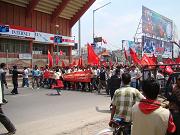
Inspired by the previous years' revolutions in Eastern Europe and provoked by an economic blockade imposed by India, the outlawed opposition parties banded together in 1990, and pro-democracy demonstrations filled the streets of Kathmandu. When the king realized that mass arrests would not quell the uprising, he gave in and lifted the ban on political parties on April 8. A week later the major parties formed an interim government and wrote a new constitution. A parliamentary democracy came into effect, with Birendra as constitutional monarch.
Elections gave a majority to the Nepali Congress, which had led the democracy movement. The Communist Party of Nepal-United Marxist-Leninist (CPN-UML) became the main opposition. The new prime minister was G.P. Koirala, brother of the late B.P. Koirala Rising inflation gave rise to general discontent (again), and an agreement with India over the Mahakali Dam project on Nepal's western frontier brought accusations of selling out to India Unimaginative and stubborn, Koirala alienated many in his own party and was forced to resign in 1994.
The elections that followed brought the Communists to power in a minority government. Prime Minister Man Mohan Adhikari launched a series of populist schemes, including the "build-your-own-village" program, which gave large cash grants to local governments. Adhikari then resigned, hoping to gain a parliamentary majority for his government through another election. The king approved Adhikari's call for elections, but the Supreme Court ruled against the maneuver. No elections were held, and the Congress party took power by allying itself with the right-wing National Democratic Party (NDP).
New Congress Prime Minister Sher Bahadur Deuba's efforts to bolster ties with the NDP were waylaid by intra-party dissent, and a March 1997 no-confidence motion brought the government down. The breakaway NDP faction led by Lokendra Bahadur Chand formed a coalition government with the CPN-UML, pushing Nepal into a new era of instability. In 1998, guerillas from the Communist Party of Nepal-Maoist turned violent and killed several NGO workers, alleging that they had mishandled funds. The assassination of an opposition party member of parliament brought strikes and rioting. When Girija Prasad Koirala refused to allow elections in December, the king dissolved parliament. In the May 1999 elections, the Nepali Congress won 110 seats to the Communist Party's 68. The Congress Party candidate in the Kathmamhi district, Krishna Prasad Bhattarai, is the current prime minister. The country's Maoist insurgency is now in its 6th year, and continues to gain support. More than 1,300 people have lost their lives in violence related to the struggle to overthrow the monarchy and set up a Communist government.
RELIGION
Nepal's religious diversity reflects its position at the cultural crossroads between India and Tibet. Nepal is about 90% Hindu and 5% Buddhist, with small Muslim, Christian, and Jain minorities. A defining characteristic of life in Nepal, however, is its unique breed of mix-and-match religious syncretism. Although Nepal is the only country in the world with Hinduism as an official state religion, most Nepalis follow some combination of Hinduism and Buddhism, with plenty of local traditions thrown in for good measure. Asked if they are Hindu or Buddhist, many Nepalis will reply that they "don't know," or that they're "both." That people can at once follow a religion of 330 million gods and one that originally recognized no gods at all baffles many visitors, but it seems to work nonetheless.
In general, the northern regions close to the border with Tibet tend to be Buddhist, while the lands closer to India are Hindu. The areas in between (including Kathmandu Valley) have the most complex blend of the two.
HINDUISM
Hinduism first came to the Kathmandu Valley with the Licchavi dynasty during the 4th and 5th centuries AD. Introduced to the hills by conquerors, it has long been Nepal's religion of status — brahmins (the priestly caste) and chhetris (the Nepalese warrior caste) have traditionally been at the top of the social hierarchy. Various legal reforms long ago tried to force lower-class Buddhists into an occupational caste system; this social practice still survives, though few Buddhists recognize the legitimacy of the caste system.
Shiva is the most popular Hindu god in Nepal; he is a fitting lord for this mountainous land, since he began his career as a Himalayan wanderer. He commonly appears in Nepal as Bhairava or "Bhairab", a ghoulish figure who chases away demons, though he is also the compassionate Mahadev, worshiped out of love and devotion. In his form as Pashupatinath, the benevolent Lord of Animals, Shiva is Nepal's patron deity, and Nepal is often referred to as Pashupatinath Bhumi (Land of Pashupatinath). The temple of Pashupatinath near Kathmandu is the most important Hindu site in Nepal.
Vishnu, the cosmic "preserver," is also popular. In Nepal he is often called Narayan, a name that comes from his role in the Hindu creation myth — he sleeps on the cosmic ocean while the creator god, Brahma, sprouts from his navel. Goddesses are also worshiped, and Nepal's grandest festival, Dasain, is held in honor of Durga. Nepal also holds a special place for Annapurna, goddess of abundance and distributor of food. Each goddess is an individual in her own right, but the goddesses are also important as the consorts of the male deities, embodying the female aspect (shakti) of each god. In the Nepalese religious tantras, this shakti is considered the most powerful and active force in the cosmos.
BUDDHISM
The Buddha was born during the 6th century BC in Lumbini, within the borders of modern Nepal. Although he left Lumbini as a young man, and did most of his traveling and teaching farther south in India, his doctrines eventually returned to the land of his birth, spreading deep into the mountains.
Most Nepali Buddhists follow the Mahayana (Great Vehicle) school, which differs from the older Theravada (Way of the Elders) school. Mahayana Buddhism, with its doctrine of salvation for all, developed in India during the 1st century AD and came to predominate in Tibet, China, Japan, and other parts of East Asia. The more orthodox Theravada school persisted in Sri Lanka and most of Southeast Asia. While Buddhism in India wa.s subsumed by Hinduism, a particularly Indian-influenced Mahayana Buddhism survived in Nepal, where it is still practiced today.
Mahayana Buddhism initially developed after a disagreement over monastic law (vinaya) in Buddhist communities. The Mahayana doctrines put less emphasis on the individual quest for nirvana, stressing instead the need for compassion for all beings. The Buddha was more than just a wise teacher and holy man in the Mahayana tradition — he is a cosmic being with magical powers and countless incarnations. The concept of a bodhisattva, who vows to put off his own enlightenment for the sake of saving all sentient beings, is very important in the Mahayana tradition, and a number of bodhisattvas are worshiped alongside the Buddha.
TIBETAN BUDDHISM
In Tibet a unique form of Buddhism developed when the Mahayana and Vajrayana (Thunderbolt Vehicle) traditions blended with the indigenous religion, Bon. Although Buddhism was originally brought to Tibet via Nepal, Tibetan traditions exerted a greater influence on the religion as it is practiced in Nepal than the other way around. As a result of the Chinese occupation of Tibet, many Tibetan Buddhists have immigrated to Nepal, bringing prayer wheels and prayer flags blowing the mantra Om Mani Padme Hum ("Hail to the jewel in the lotus") all across Nepal's mountains and hills. Tibetan Buddhism divides the Buddha's nature into five "aspects", reflected in each of the five elements (earth, water, air, fire, and space). It is also noted for its monastic tradition — before the Chinese take-over, 25% of all Tibetans belonged to some kind of religious order. Of the 6000 Tibetan monasteries in existence at the time of the occupation, only five remain. Tibetan monasteries are headed by teachers called lamas, addressed by the title rinpoche (precious one). Lamas are believed to have cultivated wisdom over many lifetimes, transmitting their knowledge to each reincarnation. The reincarnated lama is identified by using astrology, consulting the Tibetan oracle, and having the young candidates identify the former lama's possessions.
TANTRA
Tantra holds that polar opposites are merely two different manifestations of the same consciousness, and that the true nature of the mind can be realized by transcending opposites. Acts that are typically condemned, such as the consumption of meat fish, and alcohol are prescribed as ways of transcending dualities. Tantric rituals also involve the harnessing and release of different energies in the body through sexual intercourse.
Tantra has much in common with the Hindu traditions of shakti and yoga. Between the 7th and the 9th centuries, tantra became popular throughout India as part of both Hinduism and Buddhism, and its influence can still be seen today in Tibetan Buddhism, though it died out in India long ago. Some aspects of Tibetan Buddhism can be classified as Vajrayana (Thunderbolt Vehicle), a separate sect from the Mahayana and Theravada schools. Vajrayana inherited much of its symbology from the tradition of tantra — the major symbols of Vajrayana are the vajra or dorje (thunderbolt) and the ghanti (bell), meant to represent the male element of compassion and the female element of wisdom, respectively. The conscious release of bodily energy, achieved by meditation upon goddess figures, is also prominent. Vajrayana couples the dhyani Buddhas and the major bodhisattvas with taras, female consorts of great power and strength. Those figures are often depicted in sexual intercourse, symbolic of the reconciliation of dual energies.
INDIGENOUS TRADITIONS
Nepal has its own pantheon of indigenous gods, and most people worship these local heroes, quite regardless of any other religion they might follow. Common in the Kathmandu Valley is the worship of the Kumari, a young girl recognized as an incarnation of the Hindu goddess Durga. The living goddess stays secluded in a palace for her entire childhood until she reaches puberty, at which point she reverts to the status of a mortal. The Newaris also worship Macchendranath, a god born of a fish and identified both with Lokeshvara, Shiva's form as "Lord of the World", and with the Bodhisattva of Compassion, Avalokiteshvara. Macchendranath's towering chariot makes his festivals distinctive highlighls of the religious calendar. The Newari craftsmen of the Kathmandu Valley have also turned Bhima (or Bhimsen), the hero of the Mahabharata epic, into their patron deity. Also prominent in the valley is Manjushri, the valley's creator god, associated with Saraswati, the Hindu goddess of learning.
Outside the Kathmandu Valley, different ethnic groups preserve many of their local beliefs despile the widespread acceptance of Buddhism and Hinduism. The local gods are worshiped in return for good harvests and healthy children, and animal sacrifices to the gods are common. Main of Nepal's local religions are led by shamans, who mediate between the human and supernatural worlds.
CLIMB (ALMOST) EVERY MOUNTAIN
Since large-scale mountaineering began in the Himalayas during the 1950s, many climbers have come close enough to see the summits and have then returned to the bottom without actually standing on top, in deference to the deities and sacred powers that live there. Hindus believe mythical Mt. Meru to be the center of the universe and the axis of all power, Mt. Kailash in Tibet is Shiva's stomping ground, and the Gauri-Shankar and Annapurna mountains in Nepal are both named after gods. Most of the Himalayan peaks, including those with more mundane names - such as Macchapuchare, which means "fish tail," and Kanchenjunga, which means "five treasures" - are considered sacred. In fact, the Himalayan range itself is said to be the father of Shiva's consort, Parvati. Soaring to heights of over 8000m, the Nepalese Himalayas contain eight of the world's top 10 highest peaks. It's not difficult to understand how they came to be seen as the abode of the gods.
THE ARTS
The Nepalese artistic tradition emerges from the synthesis of different regional styles. Absorbing elements of Indian and Tibetan aesthetics, the Newari artisans of the Kathmandu Valley developed a distinct style and sensibility. Many older works, made mostly of wood, disappeared long ago, but many of the valley's masterpieces still remain in their original settings. Nepalese art has generally been inspired by religion, funded by kings, and executed by anonymous craftsmen.
Thanks to the boost in tourism, just about anything made in Nepal can be bought in Kathmandu, but many handicrafts are cheaper and available in a better and wider selection in their place of origin. For woodcarving and pottery, head to Bhaktapur; for papier-mache masks and puppets, go to Thimi; for metalwork, Patan; and for Tibetan crafts like thankas, the best place to go is Boudha.
THE VISUAL ARTS
ARCHITECTURE
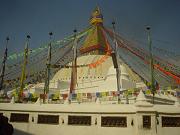
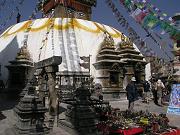
The oldest remaining structures in the Kathmandu Valley are stupas, sacred mounds of earth layered with centuries of plaster. They are large hemispherical domes, usually marking Buddhist holy places or enclosing sacred relics. Nepalese stupas, typified by the amazing Boudha Stupa in the Kathmandu Valley, display distinctive symbols on the square, golden spire at their top. These chakus are usually painted with the Buddha's eyes surveying the four cardinal directions and a number 1 in Devanagari alphabet (in nose place) to represent universal unity. Stupas are often accompanied by chaityas, small stone shrines holding written mantras or scripture.
The greatest architectural achievements of the Kathmandu Valley, though, are its wood and brick pagodas, many of which resemble elaborate chakus; it is possible that they evolved from this earlier architectural form. Nepal is considered the birthplace of the pagoda - a 13th-eentury architect named Arniko is said to have exported the pagoda to Kublai Khan's Mongolia, from where it later spread to the rest of Asia. Most of Nepal's pagodas are Hindu temples, built around a central sanctum housing the temple's deity. The sanctum is made of brick, with intricately carved wooden doors, window frames, and pillars. The pillars and struts on the outside support the tiered, sloping, clay-tiled roof. The upper portions of the temple are not separate stories as they might appear; they are left empty since there is to be nothing above the deity except the root and the heavens. The whole structure usually sits on a terraced stone base resembling a step pyramid.
The Newaris also planned and built bahals, blocks of rooms surrounding a rectangular courtyard. These compact community units were used either as monasteries or as blocks of houses. Bahals are designed to be perfectly symmetrical, and the main doors and windows usually appear along the group's central axis.
Despite their xenophobic foreign policy, the Rana prime ministers, who reigned from 1846 to 1951, embraced a European neoclassical style of architecture for the buildings they put up as part of their various modernization drives. Parts of Kathmandu's Durbar Square would not look out of place in Trafalgar Square. Modern architecture in Nepal is mainly utilitarian, using brick and concrete block.
SCULPTURE
Early work in the Kathmandu Valley was influenced by North Indian styles of stone sculpture. Newari artisans of the Licchavi period made devotional images of Vishnu and the Buddha that strongly resembled the work of the Mathura school. Written accounts indicate that wood sculpture also flourished at this time, though none has survived.
Stone sculpture in Nepal reached its height from the 7th to 9th centuries and virtually disappeared after the 10th. Metal became the medium of choice for medieval Nepalese sculpture, again as a result of Indian influence. During the 17th and 18th centuries, the dominant influence was Tibetan. Newari artisans made bronze images of tantric aspects of the Buddha, which were exported to Tibetan monasteries — many "Tibetan" bronze sculptures were actually made in Nepal. Nepalese artists of the Malla period also created fantastic wood sculptures as architectural ornaments. Temple roof struts and window grilles were made of wood ornately carved with plant and animal forms.
Over the last two centuries, the crafts of bronze-casting and wood-carving have declined somewhat because of a lack of patronage. Foreign-funded restoration projects have recently given sculptors some business, and the demand created by tourism has encouraged the mass production of consumer-oriented crafts.
PAINTING
The earliest paintings to have survived in the Kathmandu Valley were painted onto palm leaf manuscripts. A few examples have survived from as far back as the 10th century, but most are badly decayed. More common in Nepal today are Tibetan thankas (intricate scroll-paintings of deities) and mandalas (circles symbolizing the universe in Hindu and Buddhist art). During the medieval period, a distinctive Newari style of thanka developed, called a paubha. These were painted on coarser cloth and without the landscape background of a traditional Tibetan thanka. Later paintings in Nepal were heavily influenced by the detailed miniatures of the Indian Mughal and Rajasthani styles.
MUSIC
Music in Nepal is a part of everyday life. The gaine, a caste of musician-storytellers, once wandered the hills, accompanying themselves on the sarangi (a four-stringed fiddle). Music of a traditional panchai baja (five-instrument) ensemble is often played for weddings, processions, and rituals. The women of most Indo-Nepalese castes arc usually excluded from music-making, though they are allowed to sing in public during rice-planting and at the teej, an annual women's festival.
Several traditional styles of hill music still exist. Most popular is the maadal-based (double-sided drum held horizontally) jhyaure music of the western hills. The Jyapu farming caste developed an upbeat rhythmical style that uses numerous percussion instruments, including the dhime (a large two-sided drum) woodwinds to accompany nasal singing. The selo style, developed by the Tamangs but shared by others, keeps rhythm with the damphu (a flat one-sided drum).
Music is vital to Hindu and Buddhist ritual. In traditional Newari communities, most young men complete a musical apprenticeship that enables them to participate in festival processions. Newari Buddhist priests chant ancient tantric verses as part of meditation exercises, and, on sacred occasions, ritual dancing accompanies these hymns. The music of the Sherpas derives much of its character from the ancient rituals of Tibetan Buddhism.
The continued presence and influence of Indian classical music in Nepal is a relic of the days when it was all the rage at the court of the Malla kings. The Rana prime ministers were such fervent patrons of Indian classical musicians that they banned Nepalese folk performers from their courts altogether.
DANCE
Nepalese dance, in both folk and classical styles, is usually based on the dramatic retelling of sacred Buddhist and Hindu stories. The Newaris of the Kathmandu Valley are the chief exponents of classical dance. Newari performers enter a trance and become vessels possessed by the spirit of the deity. They gyrate and gesture and generally put on quite a show, dressed in elaborate costumes and ornately painted papier-mache masks. On the tenth day of the Dasain festival (in Sept. or Oct.), the nawa dancers of Bhaktapur perform the vigorous dance-drama of the goddess Durga's victory over the buffalo demon.
Tibetan Buddhism also engages music, dance, and dramatic forms in festivals, ceremonies, and sacred rites. Performances often involve intricate hand gestures, ritual objects, and the contributions of many unusual and symbolic musical instruments. Cham is a dance-drama specific to Tibetans and Bhotiyas, in which monks don masks and costumes to enact various Buddhist tales.
FOOD AND DRINK
Dal bhat tarkari (lentils, rice, and curried vegetables) is the staple dish for most Nepalis, as it is for people in large parts of North India. Indeed, bhat, the word for cooked rice, is often used as a synonym for khana (food). Food in Nepal differs little from Indian food, with the exception of a few Tibetan dishes that have made their way onto many Nepalese menus and dining tables. Ravioli-like momo and thukpa, a soup made with noodles, are popular dishes. Newari food is based largely on buffalo meat, which is commonly served instead of beef. Choyala is buffalo fried with spices and vegetables.
The most popular breads in Nepal are chappatl, identical to the ones you see in India Most Nepalis don't really eat breakfast, but it is commonly served in tourist restaurants and hotels. Vegetarians are well looked after, and they will probably have a better time with the food than meat-loving tourists.
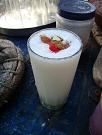
Milk, or dudh, is an important staple of the Nepalese diet, and is often served hot, making it safe to drink. Chiya (tea) is served hot with milk and lots of sugar. Yogurt (dahi) forms the base for lassis and for the Newari delicacy juju, made from yogurt, cardamom, and cinnamon. Most sweets, including barfi and peda, are milk-based.
Alcohol is drunk in Nepal primarily in the form of beer and chang, a homemade Himalayan brew Raksi is a stronger version of chang that bears a resemblance to tequila in both taste and potency. Tong-ba is a Tibetan brew made from fermented millet and sipped through a straw.
FURTHER SOURCES
GENERAL
Culture Shock! Nepal , by Jon Burbank (1992). A guide to Nepali customs and etiquette especially aimed at those planning to live and work in Nepal. Advice for all sorts of social situations and business hassles.
Nepal: Profile of a Himalayan Kingdom , by Leo E, Rose and John T. Scholz (1980). Covers the history, politics, culture, and economics of Nepal. Very sensibly written, though somewhat out of date.
TRAVEL AND CULTURE
Life and Death on Mt. Everest, by Sherry B. Ortner (1999). An exploration of the world of the Sherpas and their mountaineering culture.
Into Thin Air: A Personal Account of the Mount Everest Disaster, by Jon Krakauer (1998). Intimate and thought-provoking first-hand account of the highly publicized May 1996 Everest expeditions, in which 12 lives were lost.
Trekking in the Nepal Himalaya, by Stan Armington (1997). The most comprehensive trekking guidebook available. It includes maps, day-by-day descriptions, and altitude charts for the most popular treks.
Trekking in Nepal, by Stephen Bezrucha (1997). Detailed route descriptions and a comprehensive section on planning and health concerns. Especially rich in historical, cultural, and biological commentary on Nepal's trekking routes.
The Snow Leopard, by Peter Mathiessen (1978). Travelogue interspersed with contemplations of the existential variety. Sold everywhere in Nepal, The Snow Leopard sums up a lot of the soul-searching and nature-gazing that draw tourists to Nepal.
HISTORY AND POLITICS
Nepal: Growth of a Nation, by Ludwig Stiller (1993). An account of the period from the unification of Nepal until 1950. One of the few histories of Nepal that doesn't slobber all over the Shah dynasty.
Politics In Nepal: 1980-1990, by Rishikesh Shah (1990). Once banned by the government (always a good sign), these essays look at Nepal's more recent political history.
RELIGION
Short Description of Gods, Goddesses, and Ritual Objects of Buddhism and Hinduism in Nepal. Published by the Handicraft Association of Nepal, this short but comprehensive book includes illustrations and is a valuable (and portable) reference. Available in Kathmandu bookstores (Rs80-100).
The Festivals of Nepal, by Mary M. Anderson (1988). A month-by-month description of the legends and practices surrounding Nepal's major festivals; you'll be in the right place at the right time.
LITERATURE
Himalayan Voices: An Introduction to Modern Nepali Literature, by Michael Hutt (1991). The best of a limited number of English translations of Nepali poetry and prose.
Nepali Visions, Nepali Dreams: The Poetry of Laxmiprasad Davkota, translated by David Rubin (1980). A good introduction to Nepal's most prominent modern poet.
Ïðîäóêöèÿ ABB: óçî abb. Êàê âûáðàòü ÓÇÎ. |
|